Understanding whisky production begins with a few simple ingredients—grain, water, and yeast. Yet by the time whisky reaches your glass, it has developed hundreds of different aromas and flavors.
How is that possible?
The answer lies in the whisky production process. Every stage, from selecting the grain to aging in oak barrels, contributes to the character of the finished spirit.
By understanding whisky production, you’ll discover why whiskies can taste so different, even when they are made using similar ingredients.
Understanding Whisky Production
Step 1: Selecting the Grain
The journey begins with the grain.
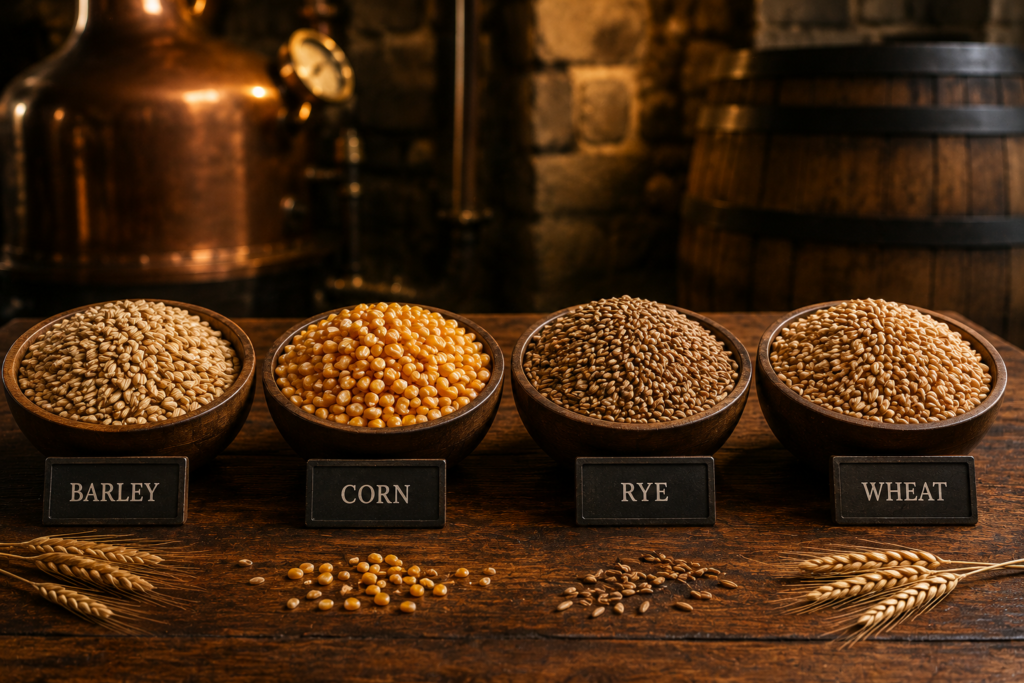
Different grains contribute different characteristics to the final whisky.
- Barley – Rich malt character, biscuits, cereal notes
- Corn – Sweetness, caramel, vanilla
- Rye – Pepper, spice, herbal notes
- Wheat – Soft, creamy texture
The type of grain used provides the foundation for the whisky’s flavor before production even begins.
Understanding Whisky Production
Step 2: Malting
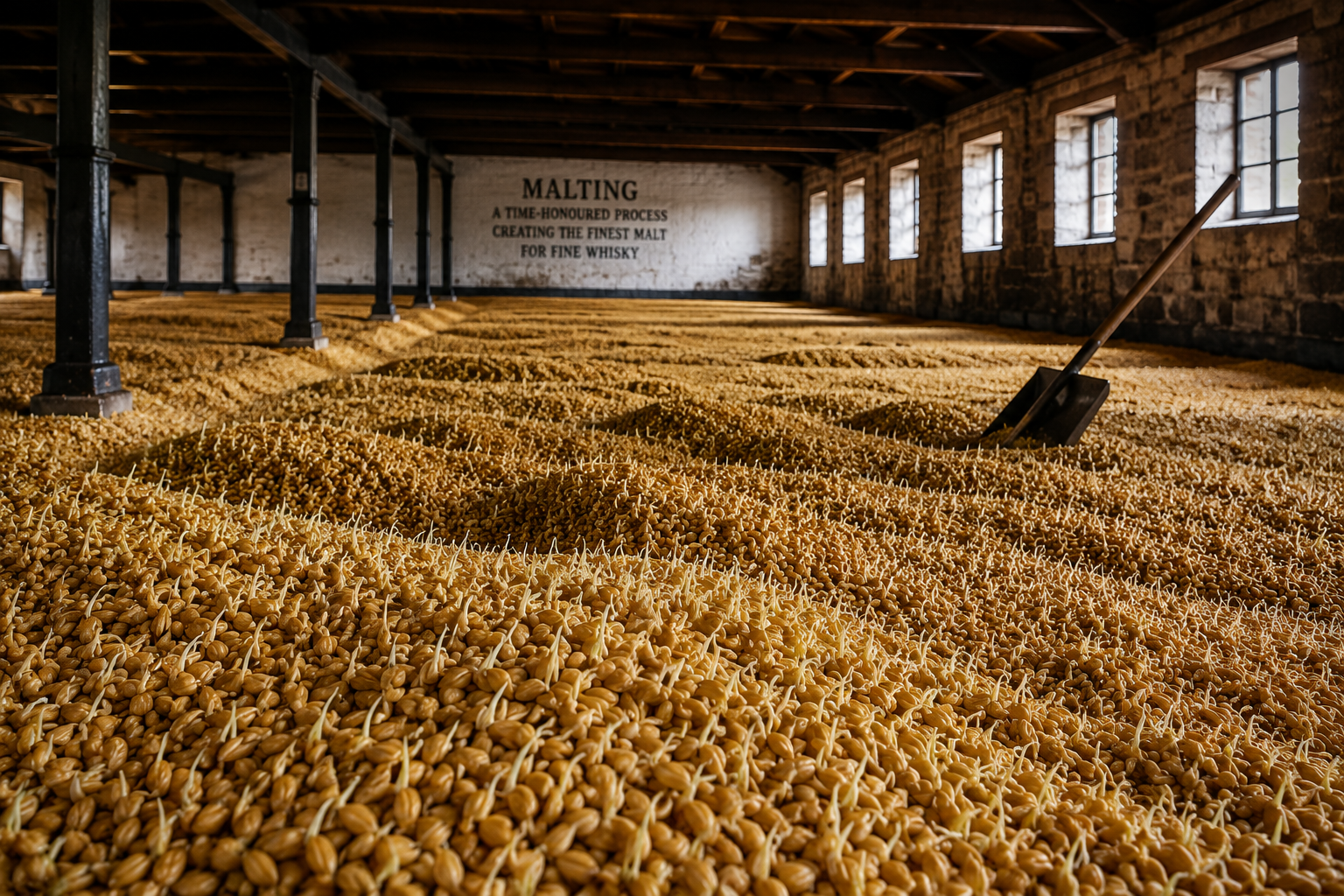
For malt whisky, barley is soaked in water and allowed to germinate.
This natural process activates enzymes that convert starches into fermentable sugars.
Once the germination reaches the desired point, the barley is dried to stop the process and ground into a grist. This is called malt. The germination process substantially changes the flavor of the grai
Some distilleries dry their malt using peat smoke, introducing smoky aromas that remain throughout the whisky’s life. Others use clean hot air, producing an unpeated spirit.
(See our article: Peated vs. Unpeated Whisky.)
Understanding Whisky Production
Step 3: Mashing
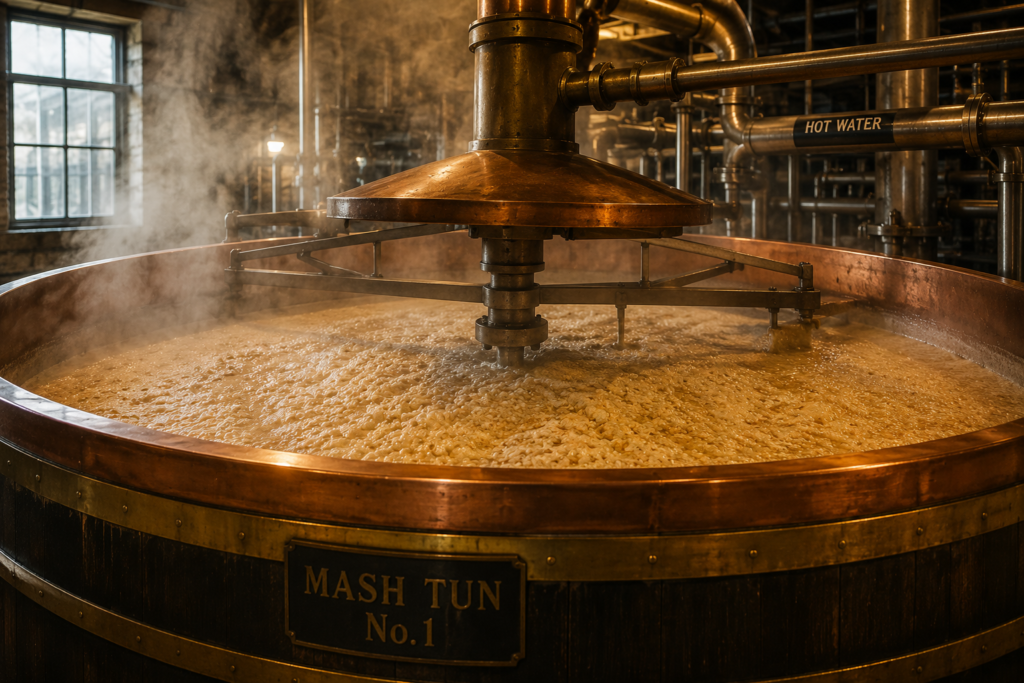
The milled malt is then combined with other milled grains in hot water where the enzymes convert the remaining starches into fermentable sugars. The result is a sweet liquid known as wort.
Understanding Whisky Production
Step 4: Fermentation
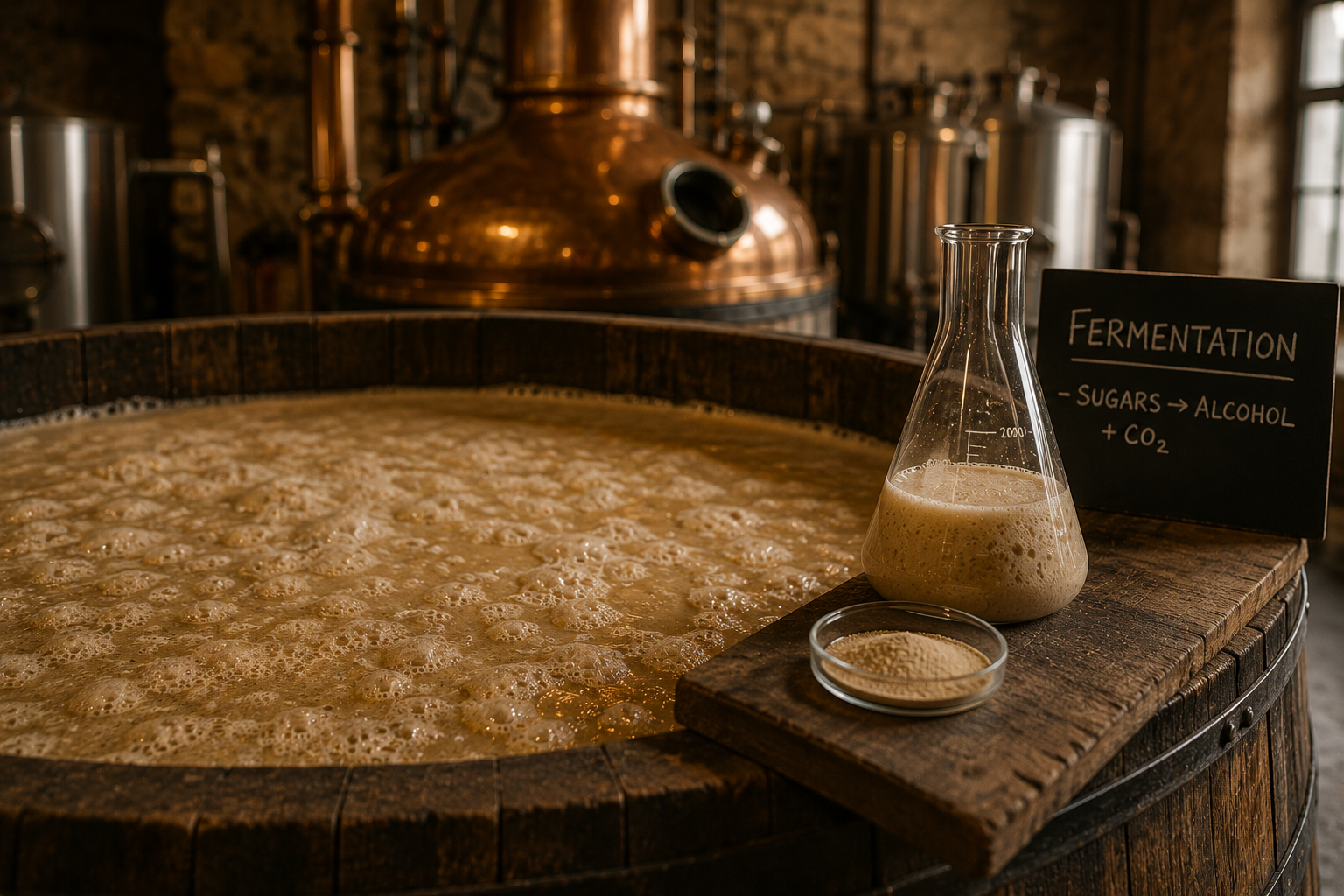
Yeast is added to the wort, converting the sugars into alcohol and carbon dioxide.
During fermentation, yeast also creates hundreds of flavor compounds known as esters.
These compounds are responsible for many fruity and floral aromas found in whisky.
Longer fermentation times often produce more complex and expressive flavors.
This stage demonstrates that flavor begins developing long before the spirit enters a barrel.
Understanding Whisky Production
Step 5: Distillation
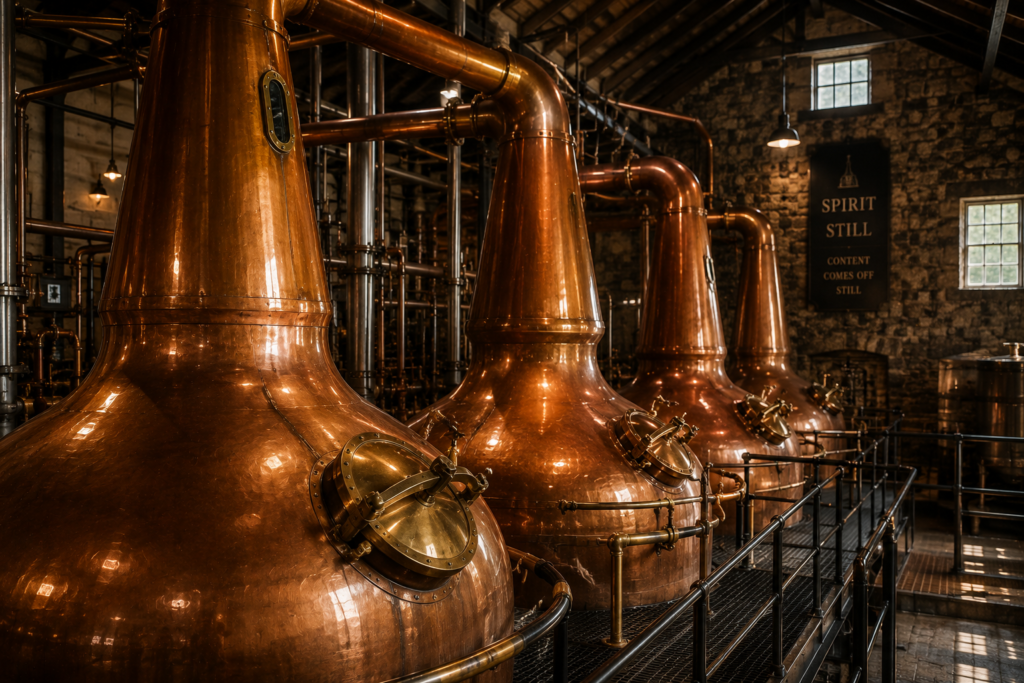
The fermented liquid is distilled to concentrate alcohol and refine flavor.
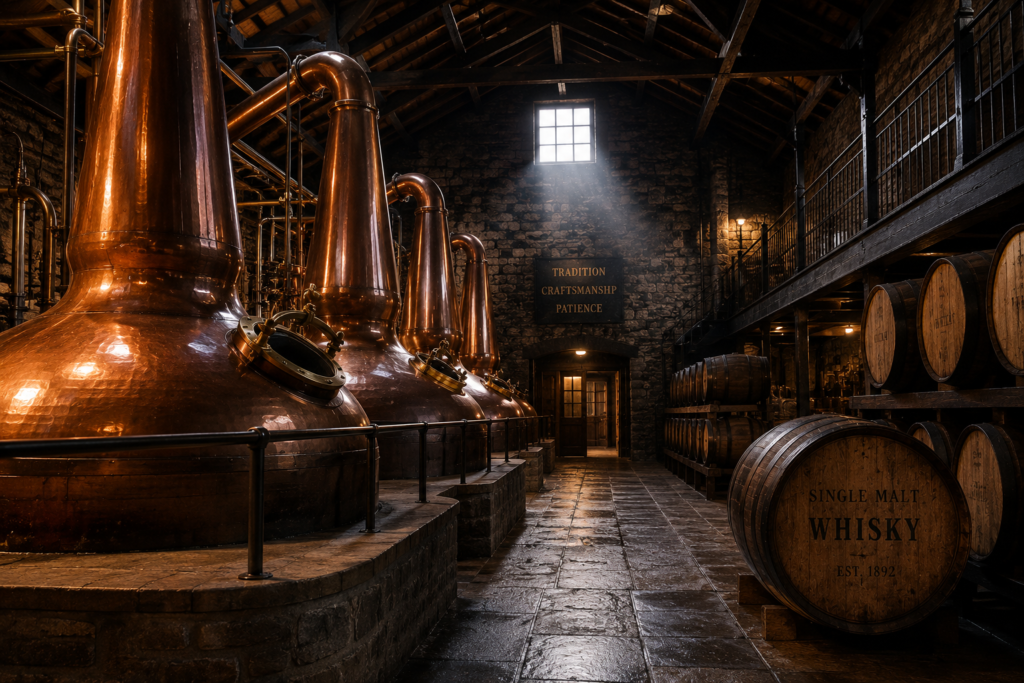
Copper pot stills are commonly used for single malt whisky, while column stills are often used for grain whisky.
The shape and size of the still, along with how the distiller makes the spirit cut, all influence the character of the new make spirit.
Distillation is where precision and craftsmanship begin to shape the whisky’s personality.
Distillation concentrates desirable aromas, removes unwanted compounds, and shapes the spirit’s body and texture by carefully selecting which compounds make it into the final spirit.
Primary flavor classes:
- Grain & Malt
- Waxy
- Oily
- Nutty
- Smoky (from peated malt)
- Mineral & Maritime
- Sulfur & Meaty (in balance)
Understanding Whisky Production
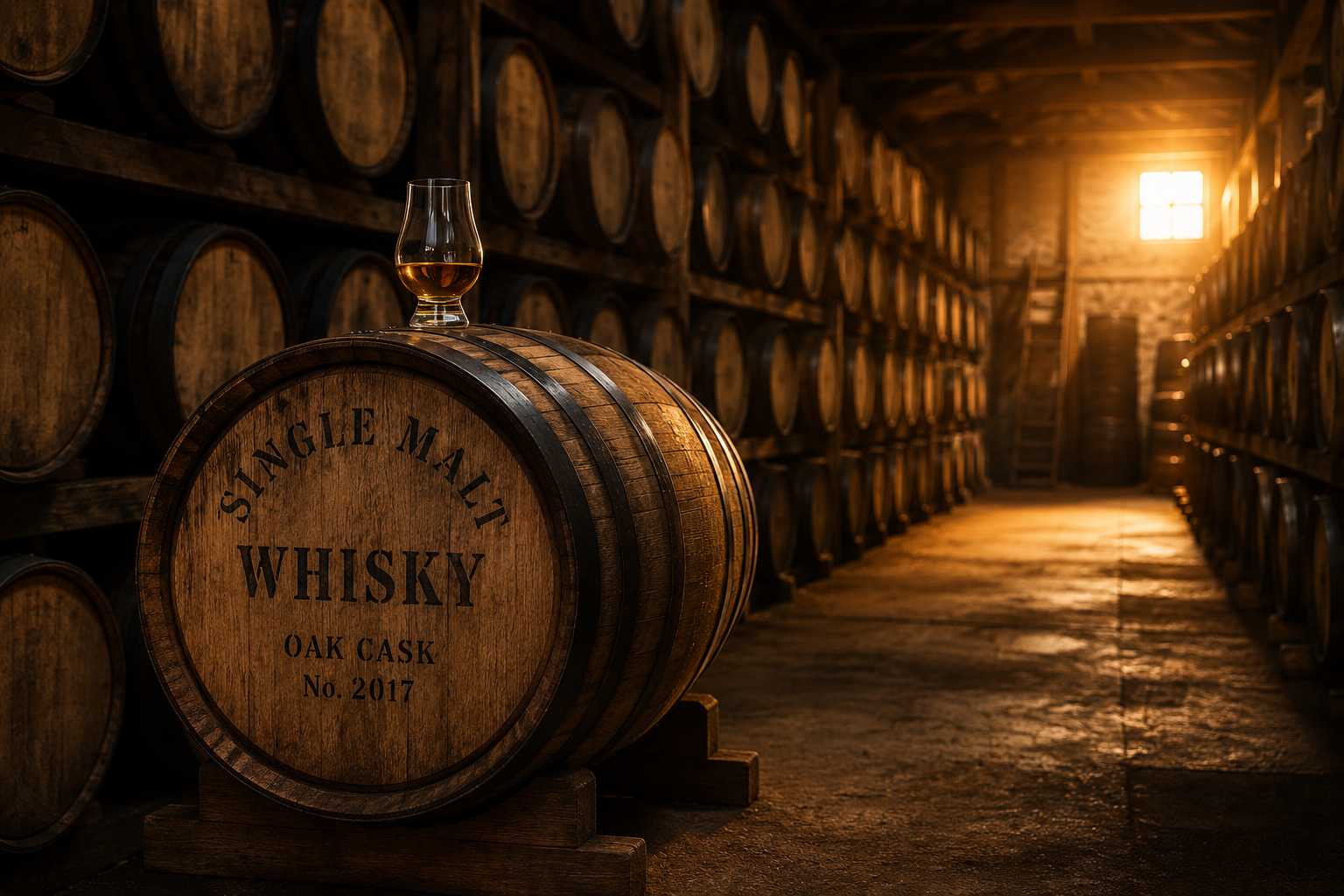
Step 6: Maturation
Freshly distilled spirit is clear and relatively simple.
As it matures in oak barrels, it develops color, texture, and many of its familiar flavors.
During maturation, the whisky interacts with the wood, drawing out notes such as:
– Vanilla
– Caramel
– Baking spice
– Coconut
– Chocolate
– Toasted oak
The type of cask, previous contents, climate, and length of aging all influence the final result.
(See our articles: How Oak Barrels Shape Whisky and Understanding Cask Finishing.)
Understanding Whisky Production
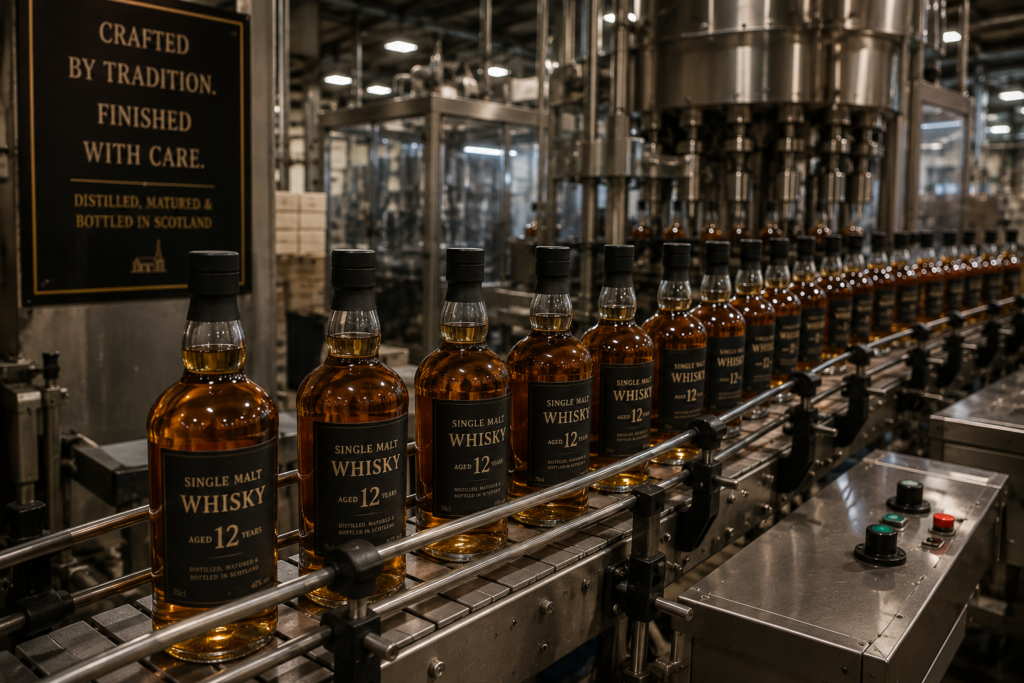
Step 7: Bottling
Once maturation is complete, the whisky is prepared for bottling.
While some producers bottle certain whiskies at cask strength, most create their desired bottling proof by adding water to achieve a consistent ABV.
Additional decisions may include:
- Chill filtration or non-chill filtration
- Natural color or added caramel coloring
- Single cask or small batch releases
These choices affect texture, appearance, and the overall tasting experience.
Bringing It All Together
No single step defines a whisky.
Instead, flavor develops through the combination of:
– Grain selection
– Malting
– Fermentation
– Distillation
– Maturation
– Bottling decisions
Each stage builds upon the one before it, creating the remarkable diversity found in whiskies around the world.
Whisky EDU Tip
Rather than asking, “Where is this whisky from?”, try asking:
- What grain was used?
- Was it peated or unpeated?
- How long was it fermented?
- What type of cask matured it?
- What is the bottling ABV?
- Where was it matured?
These questions reveal far more about how a whisky will taste than its region alone.
At Whisky EDU, we believe understanding the production process helps every whisky enthusiast appreciate the craftsmanship behind every pour.